
What Regional and Impact-Driven Organisations Must Get Right to Stay Viable, Visible, and Trusted
By almost any measure, 2026 doesn’t feel like a normal year.
Across regional Australia, particularly in the country communities that form the backbone of our regions, business owners, not-for-profits, councils, and community organisations are carrying more responsibility with fewer people, tighter budgets, rising compliance demands, and higher risk exposure. At the same time, the pace of digital change has accelerated beyond what many small teams can comfortably absorb.
Artificial intelligence, automation, cyber security, shifting customer expectations, and economic pressure are no longer abstract ideas debated in boardrooms. They’re shaping day-to-day operations right now, in the office of a three-person community health service in Maryborough, at the desk of a small manufacturing business in Horsham, and in the volunteers’ WhatsApp group for a regional festival.
The organisations that will thrive through 2026 and beyond won’t necessarily be the biggest or the most innovative. They’ll be the ones that simplify, systemise, and build trust deliberately… not as a strategic exercise, but as a practical response to the realities they’re facing.
This report distills the twelve most important trends shaping that future, with practical examples of how they’re already playing out for regional and impact-driven organisations.
Trend 1: AI Becomes Core Operational Infrastructure
The shift: AI is no longer a tool category you evaluate and purchase. It’s becoming operational infrastructure… as fundamental as email, accounting software, or cloud storage.
The biggest misunderstanding about AI is thinking of it as something you “implement.” In reality, AI is quietly weaving itself into the fabric of how work gets done. It now touches admin, finance, HR, compliance, marketing, reporting, planning, and decision support. It reduces friction across dozens of small tasks that used to consume human time, not dramatically, but cumulatively.
What this looks like in practice:
A regional not-for-profit supporting young people uses AI to summarise their weekly team meetings, turning 90 minutes of conversation into a structured summary with action items. The same tool helps them draft grant acquittals by pulling together program data, outcomes, and narrative in minutes rather than days. When board papers are due, the executive officer uses AI to standardise policy language and format reports consistently, rather than recreating documents from scratch every quarter.
A small agricultural supplies business uses AI to reconcile invoices against purchase orders, draft responses to customer enquiries about product availability, and prepare rolling 12-month cashflow forecasts based on historical patterns. None of this is flashy. No one’s posting about it on LinkedIn. But the owner now has six hours back in their week, time that used to disappear into administrative tasks that felt urgent but weren’t strategic.
The hidden benefit: Key-person risk reduction.
When knowledge lives exclusively in people’s heads, small organisations are fragile. If your grants coordinator leaves, does anyone else know how to write in your organisation’s voice? If your finance person is on leave, can anyone else explain the budget variance? AI-assisted documentation, drafting, and summarisation help institutionalise knowledge, making teams more resilient when staff leave, take parental leave, or burn out.
The sensible 12–24 month response:
Don’t “buy an AI tool.” Instead, build internal AI capability:
- Identify 3–5 agreed use cases where AI genuinely saves time (meeting summaries, first-draft reports, email responses, data formatting)
- Provide basic training so staff understand what AI can and can’t do reliably
- Set clear guardrails around confidentiality, accuracy-checking, and appropriate use
- Document where AI is being used in your operational workflows, so it’s visible and transferable
Organisations that do this early gain compounding benefits, each month, more capacity returns to the team. Those that ignore it will feel permanently understaffed, wondering why everything takes so long.
Trend 2: AI Search Replaces Traditional Discovery
The shift: Discovery is moving from browsing to direct answers.
Instead of searching Google, clicking through websites, and comparing options, customers increasingly ask AI tools direct questions: “Who should I trust for disability support in Ballarat?“, “What’s the best business accountant near Bendigo who understands farming?“, or “Which training provider has the best track record for job outcomes in regional Victoria?”
The AI synthesises an answer based on entities, reputation, consistency, and trust signals across the web. It doesn’t show ten blue links. It recommends.
What’s really changing: The evaluation model.
Traditional SEO rewarded keyword optimisation, backlinks, and page ranking. AI search rewards credibility, clarity, and corroboration. It looks for signals that an organisation is real, relevant, and trusted across multiple sources… not just on their own website.
What this looks like in practice:
Two training providers both offer Certificate III in Business. One has a well-designed website that ranks on page one of Google. But their course descriptions are vague, they have three outdated Google reviews, and their staff page shows generic headshots with no bios. Their ABN details are inconsistent across directories, and there’s minimal mention of them in community news or industry sources.
The other provider has a simpler website but clear, detailed course outlines. They have 47 recent Google reviews averaging 4.6 stars, with specific comments about job outcomes. Their staff are visible, they’re quoted in local news articles, they present at community events, their LinkedIn profiles are current. Their entity information is consistent everywhere: same business name, same address, same contact details across every platform.
When someone asks an AI tool, “Which training provider should I choose?“, the second organisation gets recommended. Not because they gamed the system, but because the evidence of their credibility is clear and corroborated.
The second-order impact: Marketing, reputation, content, and compliance are collapsing into one system.
AI search doesn’t separate these concerns. It evaluates them together. Your website content, your Google Business Profile, your reviews, your mentions in community news, your staff visibility, your ABN registration details, all of it feeds into a single trust calculation.
The sensible 12–24 month response:
Focus less on “ranking” and more on entity strength:
- Make service descriptions clear and specific. Not “we support businesses” but “we help small agricultural businesses in the Wimmera prepare for succession planning.”
- Ensure consistency everywhere. Same business name, address, phone number, and ABN across your website, Google Business, directories, and social profiles.
- Make leadership visible. Put real names, faces, and roles on your website. Encourage staff to engage publicly in their professional capacity.
- Actively collect reviews and testimonials. Not occasionally, but systematically. After every successful project, ask.
- Earn credible citations. Get mentioned in local news, industry publications, council communications, and partner websites.
- Structure your content properly. Use headings, lists, and schema markup so AI can parse what you do clearly.
Organisations that invest here early will compound visibility while others quietly fade from view.
Learn more about AI Optimisation
Trend 3: Cyber Security and Digital Trust Become Mandatory
The shift: Cyber security is no longer an IT problem or an optional investment. It’s a baseline requirement for operating at all.
Fraud, impersonation, invoice redirection scams, and data breaches are increasing across regional Australia. Small organisations are often targeted precisely because they lack mature controls they’re seen as soft targets. At the same time, insurers, funders, and regulators are lifting expectations around digital trust.
What this looks like in practice:
A regional community service receives an email that appears to be from their usual contractor, requesting that future invoices be paid to a new bank account. The email looks legitimate – correct logo, plausible reason, familiar tone. The finance volunteer processes the payment. Three weeks later, the real contractor asks why they haven’t been paid. $18,000 is gone, and the insurer challenges the claim because basic verification processes weren’t documented.
A small manufacturer’s email account is compromised through a weak password. The attacker monitors emails for two weeks, learning patterns and relationships. They then send invoices to customers with fraudulent payment details. By the time the breach is discovered, trust with several long-term customers is damaged, and the business faces both financial loss and reputational harm.
The hidden impact: Cyber incidents are increasingly treated as governance failures, not just technical ones.
Boards and committees are now expected to understand cyber risk at a basic level, even in small organisations. If something goes wrong, the question isn’t just “how did this happen?” but “what controls should have been in place?”
The sensible 12–24 month response:
Aim for baseline cyber hygiene, not perfection:
- Two-factor authentication on all critical accounts (email, banking, cloud storage, social media)
- Password manager for the team so passwords are strong, unique, and not reused
- Regular automated backups stored separately from your main systems
- Basic staff awareness training covering phishing, verification processes, and what to do if something feels wrong
- Clear incident response process documented and accessible (who gets contacted, what gets shut down, what gets preserved)
- Documented evidence that these controls exist, even a simple one-page policy matters
In 2026, digital trust isn’t just about preventing breaches. It’s about being able to demonstrate to funders, insurers, partners, and customers that you take it seriously. Digital trust is something you must be able to prove.
Trend 4: Workforce Shortages Force Automation and Systemisation
The shift: Labour shortages across regional Australia are structural, not temporary.
Demographics, migration patterns, and skills availability mean many organisations simply cannot hire enough people to meet demand. This isn’t going to resolve in the next few years. The response isn’t to work harder, it’s to work differently.
Automation, self-service, and disciplined systems are becoming essential just to maintain service levels, let alone grow.
What this looks like in practice:
A regional agricultural field day that used to attract 2,000 attendees relied heavily on a volunteer coordinator who managed registrations, exhibitor bookings, site maps, and day-of logistics. When that coordinator stepped down, the organising committee couldn’t find a replacement with the same capacity.
Their response: implement an online registration system with automated confirmations, integrate a digital site map accessible via QR codes, and create exhibitor self-service portals for setup information. Volunteers still played a critical role on the day, but they weren’t fielding hundreds of repetitive questions. The event ran smoothly with 40% fewer volunteer hours, and the coordinator role became manageable for someone with less time.
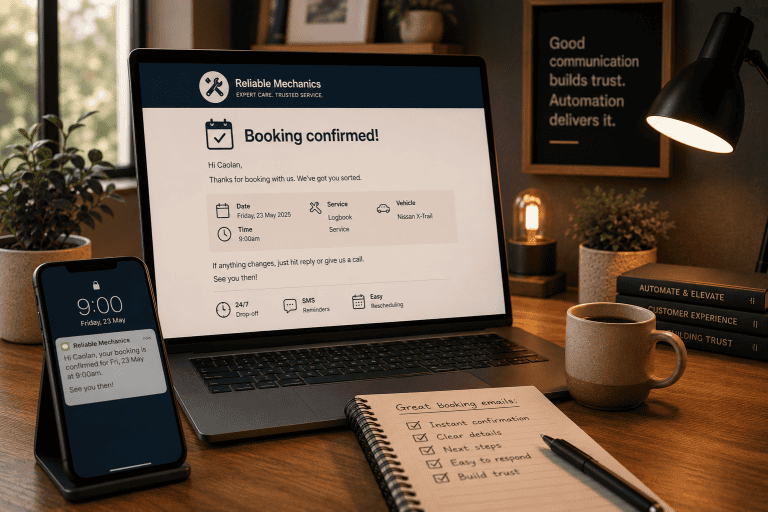
A regional health service introduced an online booking system after struggling to keep up with phone enquiries. Patients can now book, reschedule, and receive automated reminders without staff involvement. The reception team spends less time on coordination and more time supporting patients when they arrive. Missed appointments dropped by 30%, and staff burnout visibly decreased.
The cultural shift many miss:
Automation requires organisations to value consistency over heroics. In community settings where personal touch matters deeply, this can feel uncomfortable at first. There’s often resistance: “We’re not a corporation, our people want to talk to a human.”
But well-designed systems don’t replace human connection. They protect it. When staff aren’t drowning in repetitive admin, they have more energy for the interactions that actually matter, the complex enquiry, the distressed client, the partnership conversation.
The sensible 12–24 month response:
Identify the top five repetitive tasks draining staff or volunteer time and systemise them:
- Online bookings instead of phone scheduling
- Automated confirmations instead of manual follow-up emails
- Self-service information hubs instead of answering the same questions repeatedly
- AI-assisted drafting for reports, responses, and routine documents
- Templates and workflows for recurring processes
Not everything needs automation. The goal is to protect people’s capacity, not replace them.
Trend 5: Cost Pressure Drives Lean Operations and Tiny Tech Stacks
The shift: Economic pressure is forcing organisations to examine every tool, subscription, and system with new seriousness.
The era of accumulating software “just in case” is ending. What’s changing beneath the surface is the realisation that tech sprawl is a hidden cost, not just in dollars, but in complexity, risk, and staff frustration.
What this looks like in practice:
A small regional youth development organisation discovers they’re using seven different platforms: one for forms, one for CRM, one for email marketing, one for event registrations, two for file storage (because different people use different systems), and one for project management. Each has partial overlap. No one is quite sure which system is the source of truth for contact data. Staff spend half their time moving information between platforms, and every new person takes weeks to get up to speed.
When they finally audit their tech stack, they realise they’re paying for tools no one remembers signing up for, features they’ve never used, and duplicate functionality they could consolidate. They cut their tools from seven to three, centralised their data, and reduced their software costs by 60%. More importantly, staff frustration dropped noticeably.
The hidden cost of complexity:
More systems mean more attack surfaces for cyber threats, more compliance exposure (where is personal data stored?), more points of failure, and more burden on small teams to maintain integrations and remember logins.
The sensible 12–24 month response:
Deliberately pursue a tiny tech stack:
- Audit what you’re actually using. Not what you’re paying for, what gets used weekly.
- Retire tools that don’t deliver measurable value. Be ruthless.
- Consolidate data wherever possible. Aim for one CRM, one file storage system, one communication platform.
- Choose tools that do multiple things adequately over tools that do one thing perfectly.
- Document what each tool is for and who owns it. If no one can answer “why do we use this?“, you probably shouldn’t.
Simplicity isn’t a compromise. It’s a strategy. Fewer tools, used well, with clear ownership and purpose, that’s what sustainable operations look like in 2026.
Trend 6: Hyper-Focused, AI-Driven Marketing Replaces Broad Campaigns
The shift: Marketing is no longer about broadcasting messages and hoping they land.
AI has accelerated a fundamental shift toward precision, timing, and relevance. What’s really changing is that marketing, service delivery, and operations are converging. The most effective marketing now happens through behaviour-triggered journeys, personalised follow-ups, and lifecycle thinking, not mass campaigns.
What this looks like in practice:
A regional tourism operator used to send the same seasonal email to their entire database: “Summer is here. Book your getaway!” The open rates were low, conversions minimal, and it felt like shouting into a void.
They shifted approach. Now, someone who visits their pricing page but doesn’t book receives a follow-up email two days later with answers to common booking questions. Someone who attended a winter food festival gets targeted content about the summer events program. Families who visited last year receive early-bird offers for school holiday packages. Past visitors get a “we’ve missed you” message with new experiences added since their last stay.
The budget didn’t increase. The team didn’t grow. But conversions doubled, and the marketing felt less like noise and more like service.
A community health organisation supporting young parents uses similar logic. When someone completes an online intake form but doesn’t book an appointment, they receive a text with a direct scheduling link. Parents who attend a first session automatically receive resources relevant to their child’s age. Those who haven’t engaged in three months get a gentle check-in.
The second-order impact: Cost efficiency.
Hyper-focused marketing reduces waste. It respects people’s attention, reduces unsubscribes, and often outperforms larger campaigns with smaller budgets. For small organisations operating on tight margins, this matters enormously.
The sensible 12–24 month response:
Shift mindset from campaigns to systems:
- Build 1–2 simple customer journeys that respond to behaviour (e.g., enquiry → follow-up → booking → post-service check-in)
- Use AI to assist with timing and segmentation. Tools like HubSpot, Mailchimp, or even well-configured ChatGPT can help draft personalised content at scale.
- Focus on lifecycle stages, not demographics. It’s more useful to know someone is “considering their options” than to know they’re 45 years old.
- Measure what matters: conversion and retention, not open rates and clicks.
This approach benefits small businesses, non-profits, councils, and events alike, even those who “don’t really do marketing.” Everyone communicates with stakeholders. Doing it with intention makes a material difference.
Trend 7: Owned Audiences Replace Platform Dependence
The shift: For many organisations, social media quietly became the default communication layer. That worked while reach was cheap and predictable. In 2026, that assumption no longer holds.
What’s changing beneath the surface is control. Platforms change algorithms, throttle organic reach, introduce paywalls, or collapse entirely without regard for the organisations that depend on them. Visibility built on rented land is fragile.
What this looks like in practice:
A regional business posts consistently on Facebook, three times a week, well-designed graphics, community-relevant content. Two years ago, each post reached 400–600 people organically. Now, the same posts reach 50–80 people, and engagement has collapsed. The audience is still there, but the algorithm has decided not to show them the content.
A community organisation promoting a major event relies on Facebook as their primary channel. A week before the event, a key post about parking changes and entry times gets suppressed, the algorithm flags it as “commercial content” because it mentions ticket sales. Hundreds of members miss critical information, leading to confusion on the day.
A regional council runs a consultation process about local planning. They share updates via their Facebook page, assuming they’re reaching residents. Later, they discover that fewer than 10% of their followers actually saw the posts. The consultation is criticised for poor communication, even though the council thought they were doing everything right.
The second-order impact: Platform dependence undermines strategic planning.
If you can’t reliably reach your audience, everything else gets harder… sponsorship activation, funding accountability, advocacy campaigns, service delivery communications. You’re building a strategy on sand.
The sensible 12–24 month response:
Deliberately rebuild owned audiences:
- Email lists: Still the most reliable channel. Every interaction should offer an email sign-up.
- Membership databases: For associations, councils, and community groups – centralise your contact data.
- Website as hub: Your website is the only platform you truly control. Drive traffic there, not away from it.
- Direct messaging channels: SMS, WhatsApp groups, or community apps for high-priority communications.
This doesn’t mean abandoning social platforms. It means reframing them as feeders into channels you control. Use social to attract attention, but convert that attention into owned relationships.
Organisations that do this regain predictability, resilience, and leverage. Those that remain platform-dependent will continue to feel like they’re shouting into a void, wondering why no one’s listening.
Trend 8: Trust Becomes the Primary Competitive Advantage
The shift: As AI increases choice and reduces friction in discovery, trust becomes the decisive factor.
Both people and machines are filtering organisations based on credibility signals, not marketing polish. In a world where anyone can claim anything, proof matters more than promises.
What’s really changing: Trust is becoming measurable and operational.
It’s no longer a vague concept – it’s expressed through reviews, testimonials, third-party mentions, transparent governance, visible leadership, documented outcomes, and consistency across platforms. These signals feed into how both humans and AI evaluate you.
What this looks like in practice:
Two accounting firms operate in the same regional area, both serving agricultural businesses.
Firm A has a clean website with generic service descriptions: “We help businesses succeed.” Their Google Business Profile has five reviews, all from three years ago. Their staff page lists names and qualifications, but no photos or bios. There’s no evidence of community involvement, no case studies, no media mentions. Their branding is polished, but there’s nothing specific to hold onto.
Firm B has a simpler website, but every service page includes a detailed case study: “How we helped a grain farming family structure their succession plan while minimising CGT.” Their Google profile has 63 reviews, with recent responses from the principal to every one. Their staff are visible, they present at local Landcare events, they’re quoted in farming publications, their LinkedIn profiles are current and active. Their newsletter shares practical tax tips specific to agricultural businesses.
When a farming family asks their neighbour for a recommendation, or searches “agricultural accountant near me,” or asks an AI tool, “Who understands farm succession planning in the Wimmera?“, Firm B gets chosen, often without Firm A even being considered.
The second-order impact: Trust compounds.
Strong trust improves visibility in AI search. It increases conversion rates, people are more willing to book and less price-sensitive when they trust you. It attracts partnerships, funding, and referrals. It buffers you when things go wrong, trusted organisations get more grace.
Weak trust creates friction at every stage. People hesitate. They ask more questions. They comparison shop harder. They’re quick to switch if anything feels off.
The sensible 12–24 month response:
Treat trust as infrastructure, not branding:
- Actively collect reviews and testimonials. Build this into your processes, every successful engagement should result in documented feedback.
- Publish specific outcomes and case studies. Not vague claims, but evidence: “We helped 12 local businesses access the Regional Jobs Fund, securing $340,000 in total.”
- Make leadership visible. Put real people forward… names, faces, expertise. Humanise your organisation.
- Be transparent about governance, funding, and operations. Publish your policies, board members, annual reports. Transparency signals legitimacy.
- Ensure consistency across every platform. Inconsistency breeds doubt.
Trust isn’t something you claim. It’s something you demonstrate, repeatedly, over time. In 2026, it’s the difference between being considered and being invisible.
Trend 9: Compliance Load Increases Across Governance, Privacy, and Safety
The shift: Compliance expectations are expanding, and they’re flowing downwards to smaller organisations.
Small businesses, not-for-profits, and community groups are now expected to meet standards once associated only with larger entities. Privacy reform, accessibility requirements, child safety standards, workplace health and safety, employment law, and reporting obligations are increasingly enforced through funding agreements, insurance conditions, and public scrutiny.
What this looks like in practice:
A small regional not-for-profit applies for a state government grant to expand their youth programs. The application requires evidence of child safety policies, proof of Working With Children Checks for all staff and volunteers, a documented complaints process, and up-to-date governance policies including risk management and financial controls.
The organisation has been operating successfully for eight years, but most of these policies were never formally documented, they just “knew how things worked.” Scrambling to write policies from scratch while the grant deadline looms is stressful, and they miss nuances that later come back as compliance issues.
A small regional website is flagged for accessibility non-compliance after a complaint is made. They’d never considered WCAG standards, they just built what looked good. Now they face costly remediation and reputational damage, all because accessibility wasn’t considered from the start.
The hidden cost: Reactive compliance is expensive and stressful.
Organisations that scramble to respond under pressure risk mistakes, reputational damage, or lost opportunities. Compliance done at the last minute often feels like a bureaucratic burden. Compliance embedded into systems from the start becomes an enabler of trust and capability.
The sensible 12–24 month response:
Embed compliance into systems, not treat it as paperwork:
- Update core policies now, not when someone asks for them: child safety, privacy, complaints handling, WHS, financial delegation, code of conduct.
- Ensure your website meets basic accessibility standards (WCAG 2.1 Level AA). Use semantic HTML, provide alt text for images, ensure good colour contrast, and make navigation keyboard-friendly.
- Document processes clearly. How do you handle personal information? What happens if there’s a complaint? Who’s authorised to approve expenditure? Write it down.
- Centralise records. Keep compliance documents, certificates, and evidence in one accessible location.
- Treat compliance as a selling point, not a burden. “We’re a registered NDIS provider with current accreditation” is a trust signal. “We meet WCAG 2.1 accessibility standards” differentiates you.
Done well, compliance becomes proof of maturity. It opens doors to funding, partnerships, and customer confidence. Done poorly or ignored, it becomes a liability that blocks progress at the worst possible times.
Trend 10: Hybrid and Digital Service Delivery Become Default
The shift: Digital delivery is no longer an add-on or a COVID-era adaptation. It’s the expected baseline across sectors.
What’s really changing is customer expectation. People assume they can book online, access information digitally, participate remotely when needed, and receive follow-ups without friction. This applies equally to retail, tourism, health, training, events, and community services.
The organisations that treated digital delivery as temporary are now facing a permanent expectation gap.
What this looks like in practice:
A regional training provider offers Certificate III in Individual Support. They used to deliver everything face-to-face, requiring learners to attend a campus two days a week. For people living 40+ minutes away, juggling work, caring responsibilities, and unreliable transport, this was a barrier.
They shifted to hybrid delivery: foundational modules online, practical skills in intensive face-to-face blocks, assessments flexible. Participation increased by 35%, and completion rates improved because learners could fit study around their lives. The quality didn’t drop, it just became accessible.
A regional health service integrated telehealth for routine follow-ups and mental health consultations. Patients no longer need to take half a day off work and drive 90 minutes for a 15-minute check-in. Missed appointments dropped significantly, and patients reported higher satisfaction. The service maintained in-person appointments for initial assessments and complex cases, but telehealth became the default for continuity.
A regional festival introduced digital ticketing with QR codes, replacing physical ticket collection. Attendees receive schedules, maps, and updates via a simple mobile-friendly website. Day-of confusion dropped, volunteer workload decreased, and the organising committee could track attendance patterns to improve future planning.
The second-order impact: Resilience.
Organisations with hybrid capability are better equipped to handle disruption, whether from extreme weather, staffing shortages, health events, or infrastructure failures. If your service can only function in person, you’re fragile. If you have digital alternatives, you’re adaptable.
The sensible 12–24 month response:
Define your minimum viable digital service:
- Booking and registration: If people need to call you to book, you’re behind. Online booking should be standard.
- Payment: Digital payment options (card, online invoicing, payment links) should be default, not an afterthought.
- Communication: Automated confirmations, reminders, and follow-ups. Don’t make people wonder if their booking went through.
- Information access: FAQs, schedules, resources, and policies should be available online, searchable, and mobile-friendly.
- Remote participation options: Where appropriate, offer telehealth, online training modules, virtual attendance, or hybrid events.
Not everything needs to be online. But core touchpoints should be. Hybrid isn’t a differentiator anymore, it’s the baseline expectation.
Trend 11: Customer Expectations Shift Toward Convenience and Low Admin
The shift: Administrative friction is increasingly intolerable.
Customers (whether they’re clients, patients, members, or service users) are time-poor, digitally literate, and accustomed to simple experiences elsewhere. When they encounter unnecessary friction with your organisation, it’s not neutral. It’s a signal.
What’s changing beneath the surface is that admin burden is now interpreted as a sign of organisational maturity. Excessive forms, unclear processes, delayed responses, and manual paperwork signal inefficiency and erode trust, especially among people who are already stretched thin.
What this looks like in practice:
A community health service requires new clients to complete a six-page intake form by hand, bring it to their first appointment, and wait while staff manually enter the information into their system. Clients arrive frustrated, often with incomplete forms. Staff spend the first 15 minutes of every appointment fixing data entry issues instead of providing care.
A regional tourism business asks customers to email for availability, wait for a response, reply to confirm, then receive a manual invoice that must be paid via bank transfer with a reference number. One-third of enquiries never convert, not because people aren’t interested, but because the friction is too high. They book with a competitor who has online availability and instant booking.
A farming supplies business still uses handwritten invoices and phone orders. Their customers (who manage complex operations digitally) find it frustrating and increasingly take their business elsewhere to suppliers with online ordering, account management, and digital invoicing.
The hidden cost: Admin friction disproportionately harms small organisations.
Every abandoned form, every delayed response, every repeated question consumes scarce staff time and erodes goodwill. Larger organisations can absorb this inefficiency. Smaller ones can’t. The irony is that reducing friction often requires upfront effort… but the long-term return is enormous.
The sensible 12–24 month response:
Design for convenience by default:
- Simplify forms. Ask only what you genuinely need. Every additional field is a barrier.
- Automate confirmations and follow-ups. People shouldn’t have to wonder if their enquiry was received.
- Provide clear self-service information. Answer common questions on your website so people don’t have to call or email.
- Reduce back-and-forth communication. If someone can book, pay, and receive confirmation in one interaction instead of three, do it.
- Test your own processes as if you were a customer. Where do you feel friction? Fix it.
Respecting people’s time is increasingly synonymous with good service. In 2026, low admin isn’t a luxury, it’s a competitive expectation.
Trend 12: Community Collaboration Becomes Essential Infrastructure
The shift: Rising costs, insurance pressure, labour shortages, and compliance demands are pushing organisations toward collaboration, not as a goodwill gesture, but as a survival strategy.
What’s really changing is that shared infrastructure is becoming necessary. Equipment, marketing platforms, staff capability, digital systems, and even governance functions are increasingly pooled across organisations because doing it alone is no longer viable.
What this looks like in practice:
Three regional agricultural field days in the same area used to compete with each other, separate dates, separate suppliers, separate marketing. Each struggled with rising costs for staging, fencing, and equipment hire. Insurance premiums were climbing, and volunteer capacity was thinning.
They formed a collaborative network. They coordinated their calendars to avoid clashes, negotiated group rates with suppliers, shared equipment between events, and pooled marketing budgets to promote all three as a regional series. Costs dropped by 30%, supplier relationships strengthened, and attendance increased because the events weren’t cannibalising each other.
A cluster of small community organisations supporting disability services realised they were all struggling with the same compliance requirements, NDIS audits, incident reporting systems, staff training. They pooled resources to hire a shared compliance coordinator who works across all five organisations, spreading the cost and expertise. Individually, none of them could afford this capability. Collectively, they now have better systems than organisations twice their size.
Two regional youth organisations struggling with digital capability jointly employed a digital coordinator, shared between both councils. The coordinator implemented systems, trained staff, and coordinated communications across both regions, delivering outcomes neither council could achieve alone.
The second-order impact: Increased bargaining power and resilience.
Collaborative ecosystems can negotiate better rates with suppliers and insurers, share risk, access expertise none could afford individually, and deliver higher-quality outcomes. When one organisation faces a crisis, others can provide temporary support. Resilience becomes collective, not individual.
The sensible 12–24 month response:
Actively look for collaboration opportunities that reduce cost or risk:
- Shared equipment or resources (events, facilities, vehicles)
- Joint procurement (insurance, software, supplies)
- Coordinated marketing calendars to reduce audience fatigue and improve reach
- Shared staffing or expertise (compliance, digital, comms, finance)
- Aligned grant applications where funding bodies encourage collaboration
This requires trust, clear agreements, and good governance. Verbal understandings aren’t enough: document roles, costs, and decision-making processes. But the payoff is significant.
In 2026, resilience is increasingly collective. The organisations that isolate themselves will struggle. Those that build strong collaborative networks will thrive.
What These Trends Have in Common
Across all twelve trends, a clear pattern emerges.
They reward clarity over complexity.
They favour systems over heroics.
They advantage organisations that act early and deliberately.
Together, they point to one central idea: Digital resilience is now core infrastructure.
The organisations that succeed in 2026 won’t be those with the biggest budgets or the most sophisticated technology. They’ll be the ones that simplify their operations, embed AI thoughtfully, build trust deliberately, remove friction for customers and staff, and collaborate strategically.
These aren’t abstract principles. They’re practical responses to the realities facing regional and impact-driven organisations right now.
Minor Trends to Watch
Beyond the top twelve, several secondary trends are worth monitoring as they evolve:
Climate adaptation and energy resilience are becoming operational concerns, particularly for regional facilities, events, and agricultural businesses. Heat policies, backup power, water security, and contingency planning are shifting from “nice to have” to essential.
Insurance costs and uninsurable assets are reshaping viability for many organisations. Public liability, professional indemnity, and volunteer insurance are all increasing, and some assets or activities are becoming uninsurable entirely.
The care economy, mobile health, and wellbeing services are driving regional growth, creating opportunities for small businesses and not-for-profits that can deliver flexible, community-based support.
Events are extending beyond single-day experiences into memberships, content hubs, and year-round digital communities. The most successful events are becoming platforms, not one-offs.
Local procurement and sovereign capability are gaining momentum, particularly in government and corporate supply chains. Regional businesses positioned to meet these preferences have an advantage.
Content quality continues to overtake content volume. Publishing three times a day doesn’t matter if no one finds it useful. One deeply helpful resource beats fifty shallow posts.
Visual, voice, and multimodal search are slowly changing discovery behaviour. People are using image search, voice assistants, and video platforms to find information in new ways.
AI-driven fraud detection is becoming standard in payment systems and financial platforms, reducing risk for small organisations but also requiring them to understand how these systems work.
The Advantage of Acting Early
Here’s the uncomfortable truth: no organisation needs to tackle everything at once. In fact, trying to do so is often counterproductive.
The organisations that will succeed in 2026 won’t be those that implement all twelve trends perfectly. They’ll be those that choose a small number of priorities (two or three, perhaps) and act with genuine intention.
They’ll simplify their systems before they break. They’ll embed AI before they’re forced to. They’ll strengthen trust before a crisis demands it. They’ll remove friction before customers leave. They’ll collaborate before they’re too fragile to negotiate from strength.
The cost of waiting is rising.
Every month that passes, the gap widens between organisations that are building capacity and those that are falling behind. The difference isn’t always visible immediately, it shows up in small ways first. Slightly longer response times. Slightly more staff stress. Slightly fewer successful grant applications. Slightly lower customer satisfaction.
But these small gaps compound. Over 12 months, they become visible. Over 24 months, they become structural.
The opportunity for early movers is still real.
Right now, in early 2026, most regional organisations haven’t yet embedded AI into daily operations. Most haven’t optimised for AI search. Most are still platform-dependent for communications. Most haven’t systemised their compliance or reduced admin friction deliberately.
This creates a window. Organisations that move now (not perfectly, but intentionally) will build advantages that are difficult for others to replicate later. Trust compounds. Systems compound. Capability compounds.
A Practical Starting Point
If you’re reading this and feeling overwhelmed, start here:
Choose one trend that resonates most with your current pain point.
- If you’re understaffed and drowning in admin, start with Trend 1 (AI infrastructure) or Trend 4 (automation).
- If you’re struggling to attract customers or members, start with Trend 2 (AI search) or Trend 8 (trust).
- If you’ve had a cyber scare or compliance issue, start with Trend 3 (cyber security) or Trend 9 (compliance).
- If your marketing isn’t working, start with Trend 6 (hyper-focused marketing) or Trend 7 (owned audiences).
- If you’re stretched too thin financially or operationally, start with Trend 5 (tiny tech stacks) or Trend 12 (collaboration).
Pick one. Spend 90 days making meaningful progress. Then choose another.
You don’t need a transformation plan. You need a next step.
Why This Matters for Regional and Impact-Driven Organisations
These trends aren’t theoretical. They’re not borrowed from Silicon Valley or Fortune 500 playbooks. They’re grounded in the realities of small teams operating in regional Australia… teams managing tight budgets, limited staff, high expectations, and genuine pressure to deliver impact.
The organisations I work with through Regional Business Toolkit aren’t trying to be cutting-edge. They’re trying to be sustainable. They’re trying to serve their communities well without burning out their people. They’re trying to stay viable, visible, and trusted in an environment that keeps getting more complex.
That’s what this report is really about: practical resilience.
Not innovation for its own sake. Not chasing trends because they’re trendy. But understanding what’s changing, why it matters, and what sensible organisations can do about it, starting now, with the resources they actually have.
In a Year Defined by Pressure and Uncertainty, Clarity Is Power
2026 doesn’t feel like a normal year because it isn’t. The pace of change is relentless. The expectations are rising. The margin for error is shrinking.
But within that pressure, there’s also opportunity.
The organisations that simplify, systemise, and act deliberately (not perfectly, but consistently) will emerge from this period stronger. They’ll have built infrastructure that serves them for years. They’ll have earned trust that compounds. They’ll have created capacity where others see only constraint.
Clarity isn’t just comforting in uncertain times. It’s powerful. It’s the difference between reacting and responding. Between surviving and thriving.
This report is my attempt to offer that clarity, not as a consultant selling services, but as someone embedded in this ecosystem who sees patterns worth sharing.
Choose your next step. Act on it. Build from there.
That’s how sustainable change happens in regional Australia. Not through grand transformations, but through deliberate, compounding progress.