Three weeks ago I booked my car in for some work. I sat down with the mechanic, they wrote it in the diary, and I went home.
Since then, nothing. No confirmation. No reminder. Zero contact.
The booking is tomorrow. Over the past couple of days I’ve tried to call and cancel, because I can no longer make it. Every time, the phone rings out and their voicemail is full.
Unanswered phone calls and three weeks of silence has left me feeling uncertain and disconnected from the whole thing, well before I even got to the part where I couldn’t reach them.
Compare that to the mechanic who serviced my motorbike last week.
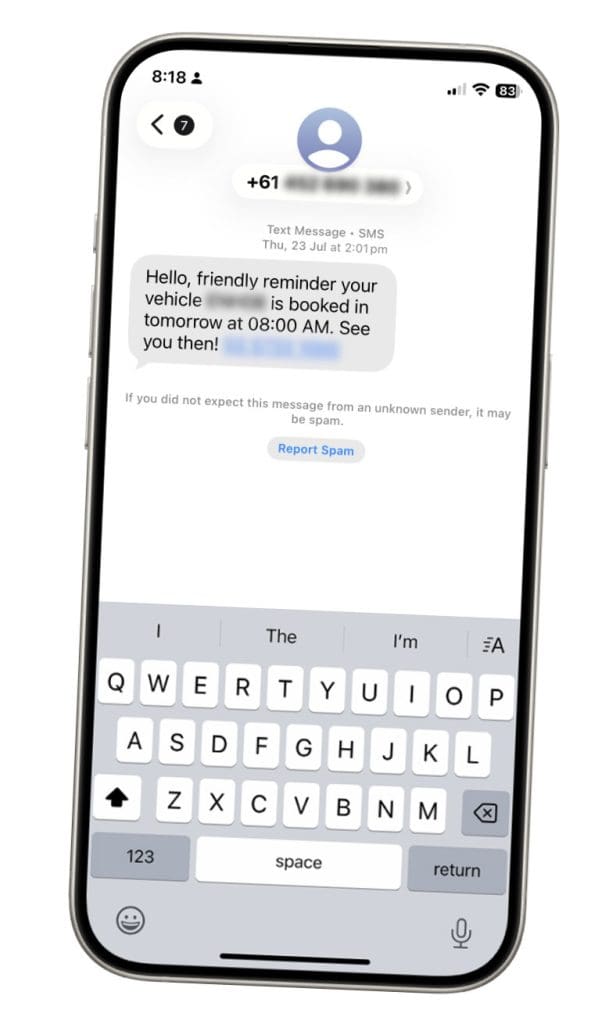
I booked a couple of weeks out. Within five minutes, a text landed confirming the appointment, with all the details I needed to put straight into my phone. Three days before the service, another message: looking forward to seeing me at the agreed time. Then, at 2:01pm the day before, a third:
“Hello, friendly reminder that your motorbike is booked in tomorrow morning at 8 o’clock. See you then. Here is our phone number.”
Same job. Same industry. Two completely different feelings.
One mechanic feels organised, on top of things, like my arrival actually matters. The other probably cares just as much about getting my business — but with no communication, there’s nothing for me to feel except uncertain.
An automation that technically worked, but didn’t land
The second example landed in my inbox last night. It came from the point-of-sale supplier used by our local visitor information centre.
“Hi, we noticed you’ve stopped using our services and wanted to make sure everything is okay. Please let us know how we can help by choosing one of the following reasons: Technical Issue, Discuss your contract, Something else.”
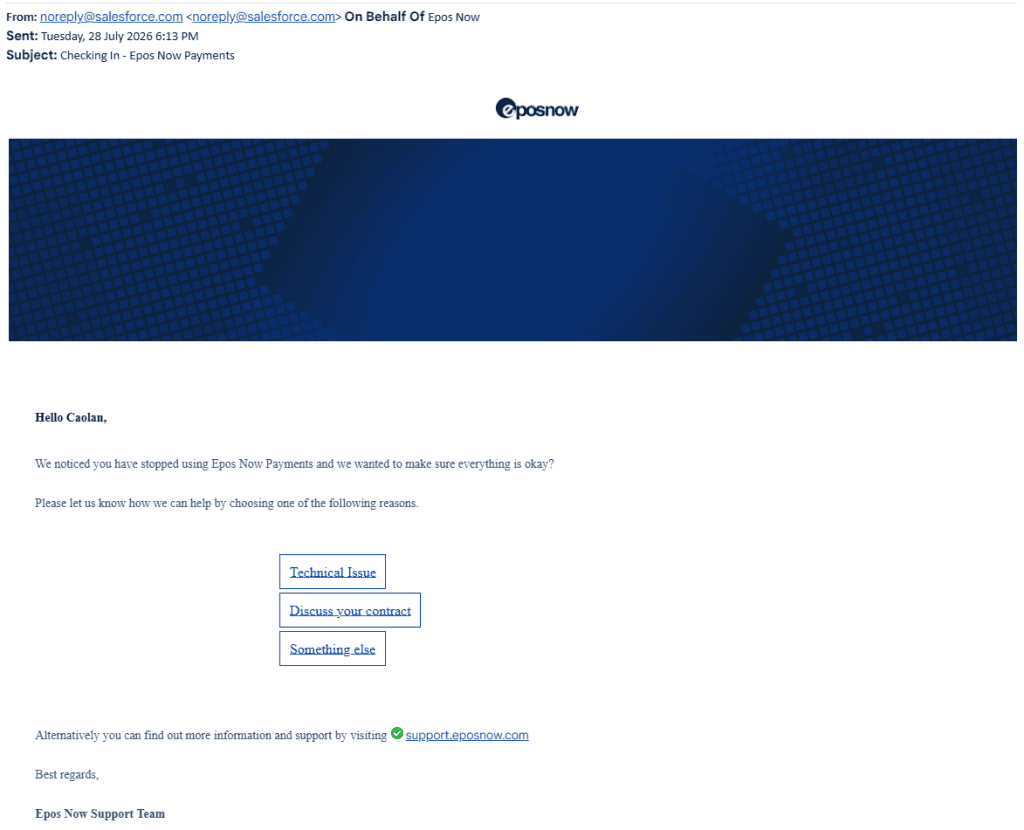
It caught me off guard, because we hadn’t stopped using anything. The agreement was current, the monthly charge was going through, and I could see transactions in the reports.
When I asked the supplier about it, they explained the trigger: no card sales for seven days, and the system sends that email automatically.
Fair enough. It’s a genuinely good idea to notice when a customer goes quiet and check in. But for a small visitor information centre in the middle of winter, seven days without a card sale is completely normal — there’d been cash sales the whole time.
The automation fired exactly as designed. It just didn’t say what was actually true. “We noticed you’ve stopped using our services” felt like an accusation. “We noticed no card transactions in the last seven days” is a fact, and a very different email to receive.
The trigger was fine. The wording was the problem.
What a good booking confirmation email actually does
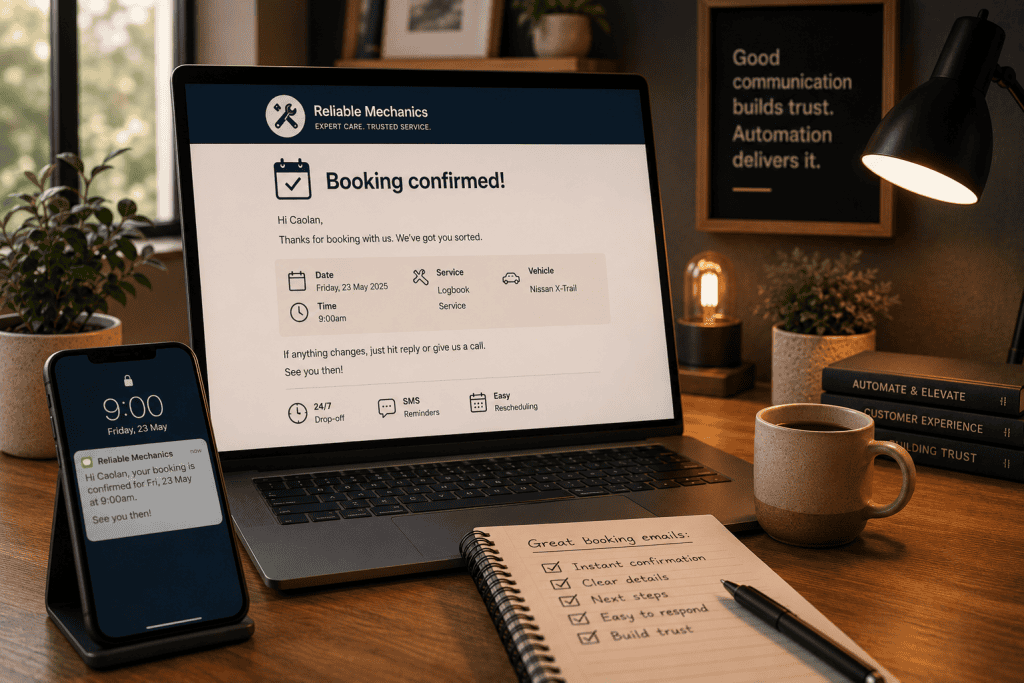
We talk a lot about automating the mechanical parts of a business and keeping the human parts human. That’s good advice. But it undersells what automated notifications can actually do.
A well-written automated message can make someone feel remembered, expected, and looked after. A poorly written one — or a missing one — can make them feel exactly the opposite, even when nothing has technically gone wrong.
The technology is only half of it. How the message makes someone feel is the other half, and it’s the half that usually gets skipped.
Where this shows up for community organisations
You might not run a mechanic’s workshop or a POS company, but you almost certainly have the same touchpoints. Someone registers for your program. Someone books a session. Someone signs up as a volunteer, renews a membership, or makes a donation.
Each of those moments is a chance to make someone feel like they matter — or a chance to leave them wondering if anything happened at all.
A few questions worth sitting with:
- When someone registers for your program or event, do they hear anything back — and how soon?
- If a volunteer signs up, does anything confirm they’re actually on the roster, or do they just have to trust it worked?
- Does a reminder go out before the day, so nobody’s caught out or forgets?
- If you send an automated check-in (a lapsed membership, an inactive supporter), does the wording match what’s actually true — or could it land as an accusation, like mine did?
None of this needs to be complicated. It doesn’t need a big system. It just needs someone to write the message the way they’d want to receive it.
Final thought
You don’t have to choose between “automate everything” and “keep it all human.” The best automated notifications do both — they handle the mechanical part (the sending, the timing) while still sounding like a person who’s glad you’re coming.
If you’re not sure what your own booking confirmations, reminders, or check-in emails actually sound like to the person receiving them, that’s worth a look.
Email me and tell me what those moments look like in your organisation right now — what gets sent, when, and by what. No obligation, just an honest read on whether they’re landing the way you think they are.